Showing posts with label peak oil. Show all posts

Thursday, October 28, 2010

Nine meals away from anarchy

Work with me here - this is a bit of a rambling path of a post.

I recently heard a radio interview with someone from CHOICE magazine about their Shonky awards and the main part that I heard was their critique of Coles' Feed a Family of 4 for under $10 promotion. CHOICE said:

Shonky for ten-buck blow-out goes to... Coles

When we were culling our list of nominees down to a manageable eight, the clouds of conundrum hovered over Coles: so many potential Shonky awards, but which one to give?(snip) However, we decided to give the Shonky for its loaves-and-fishes $10 meals, where you can supposedly make some Curtis Stone MasterCreation to feed four people for less than $10 – provided, it turns out, if you happen to have some of the stuff in your pantry already and you manage to convince Coles to let you buy two cloves of garlic or one bay leaf. We calculated Curtis’ $7.76 Coq au vin would cost $37.74 if you bought all the necessary ingredients – including the integral half-litre of vin, which somehow wasn’t included in the $7.76 (though you’d perhaps hope not for that price). And it wasn't just that recipe - the $9.99 Chicken Tikka Masala set us back $39.74.
And the person from CHOICE being interviewed snickered and chortled about "who has that well-stocked a pantry" and "why would you have half the ingredients in your pantry when a supermarket is just around the corner" and so on. The interviewer agreed with her, all the while agreeing that it was unreasonable to have things like wine, stock, herbs, spices, garlic and so forth on hand.

I take a lot of pride in our pantry. I should take a photo of it to put here but for now I can tell you that I could probably feed my family for about 3 weeks on what is in there, maybe more. I have flour, sugar, salt, yeast, milk, cream, pulses and lentils and beans, vegetables, pasta, rice, tinned tomatoes and a whole lot of other things that are stocked in there. If I had a larder I would be serious about stockpiling our food. We also have a chest freezer full of meat. With a Thermomix now, we don't need to have food precooked so much - just a few bits and pieces in the freezer for a true emergency or for someone else to feed us with, rather than heat-and-eat meals.

This is for two reasons. Firstly, our income can be a bit cyclical and when we've got more income, we can stock up on things and "save" that way.

Secondly, as peaktavists, we are sure that at some point soon we will have an energy crisis that will mean there will be a problem with food supply, even here in Adelaide in an established first world country. It happened in the UK just this year. And it will happen here in Australia sometime soon. Milk and bread will go first. Then fruit and vegetables. Then canned and frozen goods, toilet paper, first aid/pain relief and packaged items like pasta and chocolate.

I recently heard another discussion, on the ABC so I should be able to add it in later, about organic food and food security - which, like water security, will be buzz words of 2011 I think - and someone spoke about the situation where any country is only 9 meals away from anarchy. Some say it's only 4 meals though.  

And so - we have a well-stocked pantry. I'm working on building it into a larder, with extra things like toilet paper and spices. We have a "zombie store" as well - extra long lasting foods, in tins, as well as water and toilet paper. For the impending zombia apocalypse. We have a garden that will hopefully produce more than just spinach soon. We have friends with eggs, and we have skills to trade.

And that is what is going to help us. I can bake, and I have a recipe book - or a dozen - because yes, I do use the internet for a lot of recipes but in the real world one day the internet might not be there. I can make soap, make a lotion, make a cream, make a balm. I have good aromatherapy knowledge and a stock of oils to use. I have books to refer to for first aid as well as the skills. I have a strong TheHusband who can do all kinds of mechanical and labouring type things. We try to be low maintenance in general with our health and wellbeing.

And so, I maintain a pantry. Just in case one day we can't access the superpantry, just-in-time, don't worry I'll just pop out and get some life that is being foisted on us. It's not paranoia, but a form of saving for a rainy day.

Tuesday, March 17, 2009

What would be hardest to give up?

It's going around the enviro-green blogs at the moment to ponder what the most difficult thing to change would be. "On the path to sustainability, What Is The Most Difficult Thing To Change" has a heap of comments outlining what readers think would be the hardest to lose. So here is my list of 5 things that I'd find hardest to give up:
  1. Coffee. Environmentally I try to get green(er) or organic, and free trade coffee. But when I'm out and about and want something, I'm not so able to find this and not so disciplined as to say no to my want.
  2. Toilet paper, paper towel, tissues and plastic bags for little bins - but that's from a hygeine point of view. It's a perception perhaps that these things make my life cleaner, and I'm trying to change my approach but it's really hard to see myself using reusable toilet wipes. Paper towel is a bit easier to get away from, but the plastic bin liners are also part of my culture and they save me time in maintaining bins.

    Heh - I didn't say I was virtuous here. Just honest.

  3. Eating non-locally produced food. Eating locally-grown produce is relatively easy. I refuse to eat imported fruit and veg, but I'd like to eat more locally-made foods to. It'd help if there were labels about this on items. Or alternately, a clear line of "it is better to eat locally-grown food than eat imported or shipped organically-grown food" to help me decide.
  4. Colouring my hair. I love doing it for the pick-me-up I get but it's not fab for the environment or for sustainability.
  5. Electricity, internets etc - I spend a lot of time on it. Our bills are low and not changed in winter too much but still, it's something of a concern.

Thursday, March 12, 2009

Thankyou for the future

Leading on from Peak Oil Hausfrau:

Thankyou for walking to the shops to do some grocery shopping, for taking your own bags and backpack, for taking a trolley and for enjoying yourself in some sunshine. You have reduced your consumption because you are limited in what you can buy (because you have to carry it home), you're doing your bit for your own health by walking, and you are trundling your trolley along behind you so had to pack your goods sensibly and maybe buy in bulk.

Thankyou for buying a water bottle and using it, refilling it, washing it and keeping it with you when you go out. If not - thankyou for drinking out of your hands in the bathroom.

Thankyou for not washing your car, for not flushing the toilet every time you wee in it, and for wearing clothes until they really need a wash.

Thankyou for buying 2nd hand - clothes, books, baby gear, textbooks, furniture, cars, decorations etc.

Thankyou for using a Diva Cup or similar innovative item!

Sunday, February 15, 2009

It's the economy, stupid... or the stupid economy?

The economic meltdown is yet to really hit here in Australia - there's bits and pieces about it affecting a shift at the car manufacturer here, (but that is probably because they insist on making big V6 cars here in Adelaideand making the much more sensible in oh so many ways smaller cars overseas) or a mine here, or an exporter here, but as yet it's not Really Hit Home. I find the web is therefore a REAL eye opener about people losing their jobs suddenly and horribly for that reason.

Comments around various blogs about the manufacturing issue with the USA - applies here too. We lost our entire clothing/footware manufacturing not that long ago, and not only did we lose the skills but there was also a move away from blue collar work being available to people, and towards people having no choice but to be unemployed because they can't (or granted, won't) do the work available.

In some ways I agree with the throwaway comments being made about "bring on another depression". People are soft. They don't know how to cook, or sew, or grow, or look after animals, or bake, or live communally, or raise children, and that means they are chasing something unreal and "higher" and ?more laudible than making a home and family work.

I just read a rambly post about this topic from the perspective of Gen X. It talks a lot about the change that people are making to going back to their hearth and raising children and running on one income rather than outsourcing childcare and food making and clothes construction, and chasing a bigger house and a second car and more and more debt. So many things have been outsourced and that makes us all very vulnerable when the economy contracts and people aren't able or willing to do those things.

And I include myself in all of this - I rely on society to do things for me that I don't want to do. Society is about that at a basic level (we can't do everything for ourselves!) but it costs money to do that, and it costs more for Jane to do x for me than it would me for to do said x for me, so there is an inflation involved in that. As more things are outsourced, I have to earn more or rack up more debt to get the same things as before, and so I am now living beyond my means. Multiply that by the whole economy and we're suddenly screwed. And there will be a day/year/decade of reckoning of this and it's going to hurt.

Where are the communes these days? Not so much in the free love kind of way, but in the "farm with workers" or the "boarding house with employees living in" or the "large house with family running it" etc. We live in way more space than we need or use and have spare rooms just in case, and a craft/yoga/study/library room that we use hardly ever and try to fill with stuff that we can't afford to have and don't use and so we spend more money that we don't have to entertain ourselves instead of reading a book or doing a workout or crafting.

And raising families - it takes a community to do this. An article I read recently suggested that what defines Gen X and Y from the previous generations is that we count our friends as or above families in terms of how much we see them and what we ask of them or do for them.

This also comes at the same time as peak oil is more part of the discussion, and people are worried about the impact that the reduction in cheap energy will have. I see so many of my friends getting bikes and scooters, and moving close to where they work, and reskilling, and embracing crafts and reuse/recycling/repurposing, and living in share houses even when in adult years.

I am trying to work through what this means for having a family plans in the next year or so as well. If the economy does implode here, I am relatively safe as I will always be able to find work. I can't say the same for many of my friends and family though, which is distressing.

Monday, January 26, 2009

Plastic bags - or "Why I may need an asbestos suit to post this"

I went food shopping yesterday and bought a lot of groceries as I also made-to-freeze 4 lasagnes, 3 quiches, 2 custard tarts and some jam tarts, as well as hosting a Hottest 100 Aussie Day bbq today. I purposefully took no reusable shopping bags with me because I wanted to stock up on plastic bags. I got some filthy looks from the checkout chic because of this so I feel like posting about my position on bags.

The average plastic bag is repurposed when you get home with it - you use it to line little bins around the house, to take lunch to work in, to put wet bathers in after the beach or pool, to pick up dog poo, and so on. What is going to happen to these parts of our life when bags are phased out?
  • Take away the small bins and just use one large on in the kitchen, still lined with a plastic bag. Increase use of plastic bags as we won't reduce our volume of rubbish, but just concentrate it in one place.
  • Get a bag of some description to take lunch to work in. Decrease frugality as these will wear out, and will need maintenance and cleaning, and may get lost / left behind.
  • Wet items need coralling still, so more consumption to replace this use.
  • Dog poo collection drops as people (who from my observation are RUDELY incapable of collecting their dog's turds anyway) reduce the amount of poo that is collected unless they are near a bin (which have been removed because they are terrorist threats) and aren't carrying a pooper scooper.
And so on. Plastic is a part of our life - and as a peak oil'ist, and a chemistry graduate, I know that our love affair with it will have to stop soon and it will be horrible and painful. But instead of advocating chucking out the Tupperware and stepping away from the ziplock bags, I'd love some of the trendy greenies out there to get a grip on what actually impacts on greenhouse gasses - and in Australia, for the most part, if you changed the food that you ate, you'd have a BIGGER impact on your footprint by sharehousing, giving up the car (or at least the 2nd one), walking or riding more, and eating locally and in season.

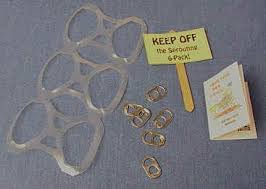
Giving up the plastic bag is simple and pathetic and ineffective and such a lovely case of greenwashing. If the reasons people were saying to ban plastic bags actually had anything to do with the impact that they have on marine life, then I'd be all ears and would bang that drum! But most people are completely unaware of the impact that these have, because the 6 pack plastic beer can holders have been phased out here in Australia and few people think it's a problem anymore.

And for that matter - what do you think the reusable bags are made out of? They are made out of plastics. If they're made from recycled plastic, then that's a lot of energy and water involved in recycling plastic into something else. The bags also have to be shipped from point A (you) to point B (depot) to point C (consolidation) to point D (export) to point E (recycling) to point F (packing) and back to you... which is a bigger impact on greenhouse gasses than just using more bags. And then consider that a plastic bag and a reusable bag hold around about half and twice the amount respectively, but the reusable bag weighs more than twice the others and is BIGGER, so transport costs are higher anyway!

Precisely how green are these things then? Not very, I think.

On the other hand, by removing plastic bags from every shop, you are perhaps forcing more people to think about their impact on the environment. In theory, anyway, as your average pleb is completely ignorant to peak oil, or the impact we are having on biodiversity or resilience in our environment. Removing bags isn't going to reduce consumption, but will increase the amount of $$ we are spending on appearing to be conscious of our impact.
  • And as as aside, at The House of Bun, we have not had bags for 4 or so years, and sell reusable bags (the green ones rock as they are huge and have a reinforced bottom and are square based, whereas the red ones are like a beach bag / tote in construction) bags but still have people bitch about not having bags. We have boxes that are availbale to any customer to pack their purchases in, and still people bitch because they don't have a bag to put things in. But funnily enough, we do get a lot of people who are moving house and want to come to us to get free boxes to move in. I can remember doing that when I first moved house 10 years ago, and now no other store has a box coralle at the front of the store for boxes. Will we see a return to this?